

|
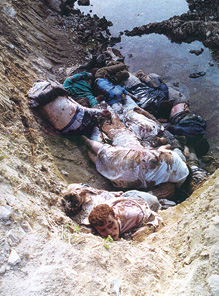
Exhibit photos showing a murder
perpetrated by Goran Jelisić |
|
|
|
|
Making extensive use of evidence presented in the cases, representatives from the Tribunal were able to give an insight into the meticulous and painstaking investigations conducted by the Tribunal and to explain how allegations of murder, beatings, rape, inhumane conditions and theft from civilians were proven before the court.
In the Goran Jelisić and Ranko Češić cases the two defendants were both found guilty of violations of the laws or customs of war and crimes against humanity and sentenced to 40 and 18 years' imprisonment, respectively.
Reactions of the audience highlighted the need to persist with efforts to bring to justice perpetrators of all crimes, regardless of the nationality of the victims or the perpetrators. ICTY representatives reiterated the Tribunal’s preparedness to continue to do all it can to assist domestic authorities in bringing further prosecutions.
The full report contains a summary of proceedings using the transcripts from the day,
including opening remarks, presentations from Tribunal staff, photographs used as
evidence in the cases and questions from the audience.
| Goran Jelisić case
|
Ranko Češić case
|
|||
 G. Jelisić |
 Case Information Sheet Case Information Sheet
|
 R. Češić |
Case Information Sheet
|
|

| Other ICTY cases related to the Brčko area: |
| Karadžić ♦ Krajišnik ♦ Milošević, Slobodan ♦ Mladić ♦ Plavšić ♦ Župljanin and Stanišić |